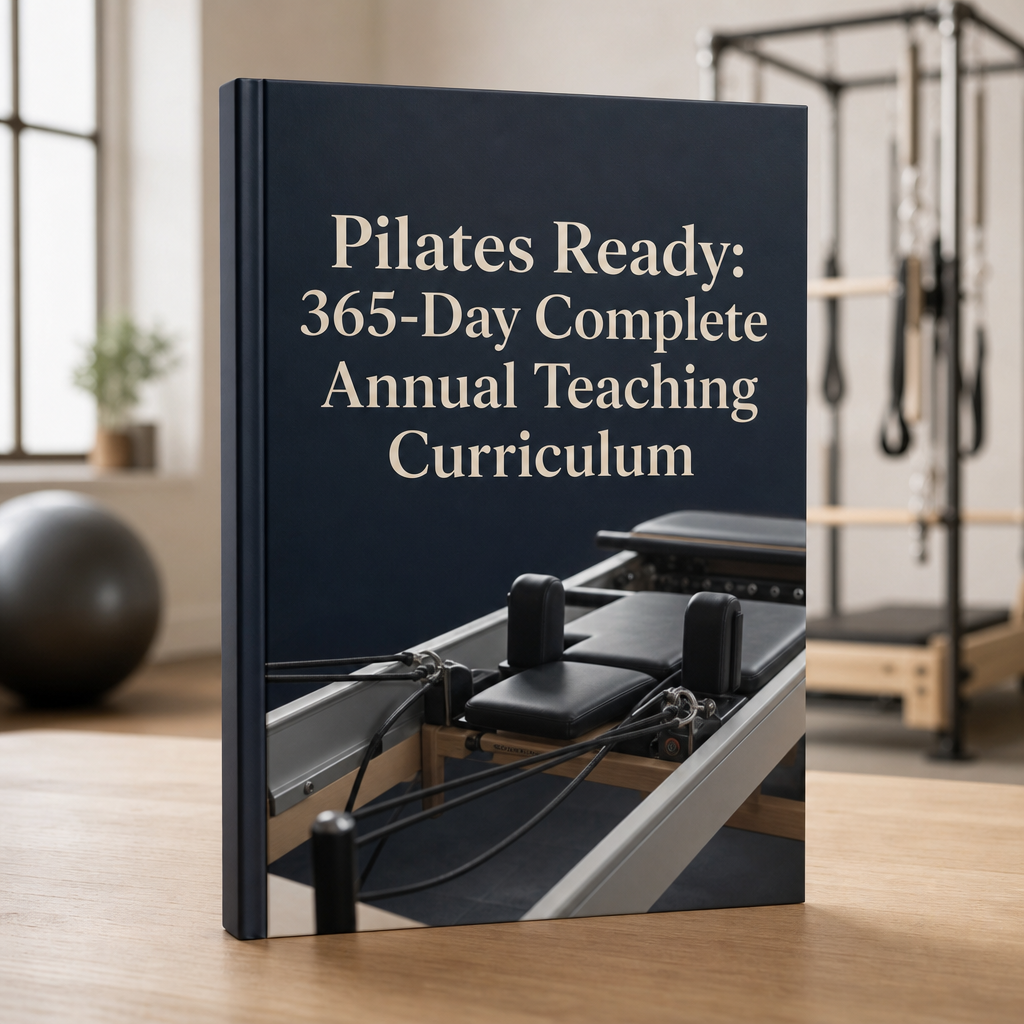
A complete 365-day Pilates annual teaching system: sequenced sessions, exact cues, modifications, and instructor strategyβso your clients feel steady progress all year.
You save US$Β 155 (85% OFF)
In addition to the ebook, these gifts come with it
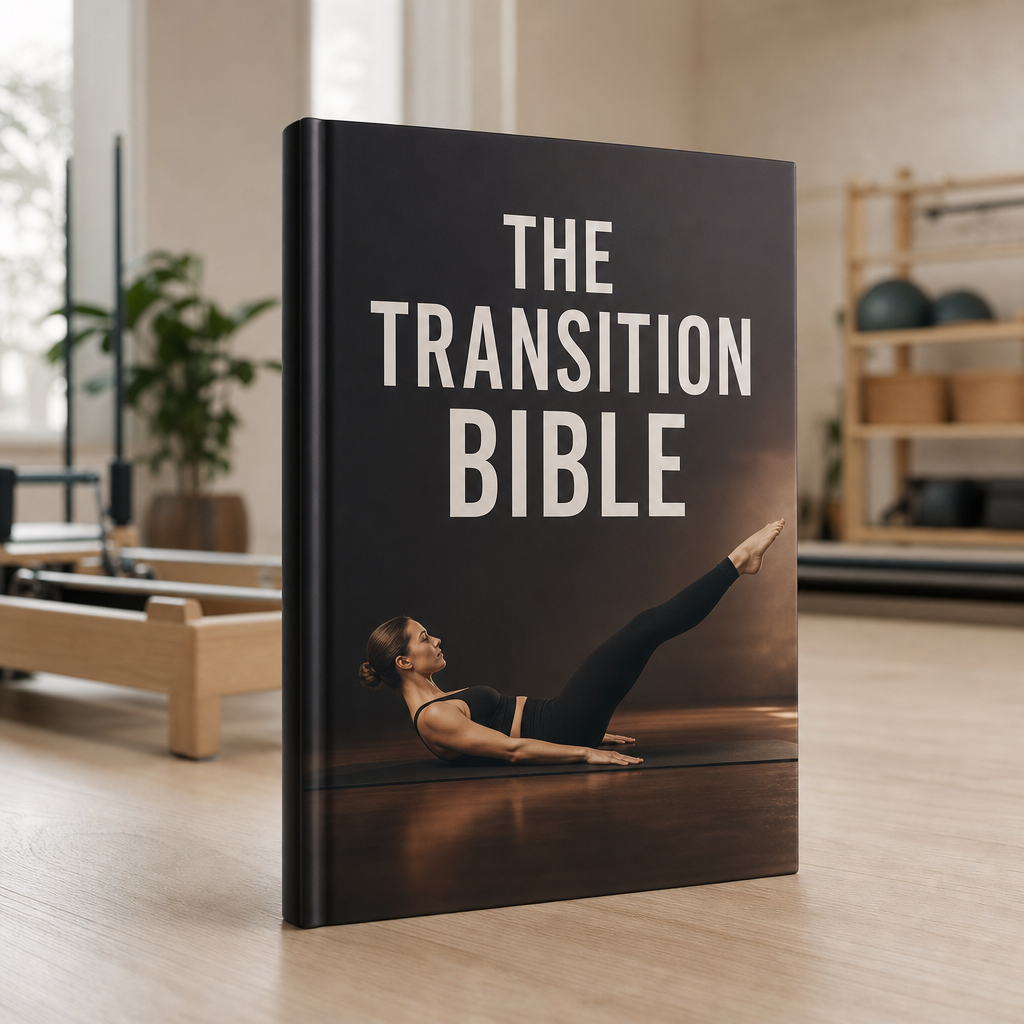
The Art of Seamless Movement for Pilates Professionals Stop breaking the flow. Start teaching like a master. Introduction: The Magic in the Middle Most instructors focus 100% of their energy on the exercises. They spend hours learning the anatomy of "The Hundred" or the mechanics of "The Swan." But there is a secret that separates the top 1% of instructors in NYC, London, and Sydney from the rest: They teach the transitions. A transition is not a "break" between movements. It is the connective tissue that maintains the client's internal focus, keeps the heart rate steady, and preserves the neurological "Alpha State" of flow. When you stop to explain the next move, the magic is lost. When you flow seamlessly, the class becomes a moving meditation. This guide will show you how to eliminate the "awkward silence" and the "explanation pause" forever. Section 1: The 4 Rules of Masterful Flow To master transitions, you must follow the Four Pillars of Fluidity. These rules ensure that your class feels like one continuous breath rather than a series of disconnected tasks. Seed the Next Move: Start cueing the next position while the clients are performing the final 2 repetitions of the current exercise. Never wait for them to stop before you speak. Minimize Mechanical Changes: Group your exercises by position (Supine, Prone, Side-Lying). Every time a client has to stand up and sit back down, you lose 15% of their mental engagement. The "Anchor" Principle: Always keep one body part in contact with the mat or the equipment during a transition. This "anchor" provides the client with a sense of safety and continuity. Language of Continuity: Replace "Okay, now we are going to..." with "As you exhale, let that movement carry you into..." Use verbs that imply ongoing motion. Section 2: The 5 Transition Archetypes Every transition in your repertoire falls into one of these five categories. Master these, and you can improvise a seamless flow with any sequence. Archetype 1: The Breath Bridge. The exhale of the last rep is the inhale of the setup for the next. Archetype 2: The Position Roll. Using spinal articulation (like a roll-down) to change from standing to seated or supine. Archetype 3: The Anchor & Shift. Keeping hands planted while the hips move back (e.g., Swan to Childβs Pose). Archetype 4: The Mirror Flow. Using the transition to switch sides symmetrically in side-lying series. Archetype 5: The Reset Breath. A deliberate, cued pause that integrates the work before moving to a new plane of motion. Section 3: The Master Transition Library (Top 10) This is your "cheat sheet" for the most common sequences in the Pilates Ready curriculum. Hundred β Single Leg Stretch: Keep the head curled up. As the pumps fade, one knee draws in, the other extends. No pause. Single Leg Stretch β Double Leg Stretch: Both knees meet in the center on an inhale. Both arms and legs reach away on the exhale. Rolling Like a Ball β Spine Stretch Forward: On the final roll, stay upright, extend the legs long, and immediately grow tall into the setup. Swan Prep β Childβs Pose: Hands stay under shoulders. Hips simply rock back. The hands never leave the mat. Bridge β Shoulder Bridge: Stay at the top of the bridge. Shift weight to one foot. The other leg floats to the ceiling. Side Series β Transition to Side B: Roll through the spine (supine) to reach the other side. Never sit up to switch. Spine Stretch β Saw: From the upright position, simply open the legs wider and reach the arms out. No adjustment of the hips. Plank β Downward Dog/Elephant: Life the hips from the core. The hands and feet stay exactly where they were in the plank. Seated work β Standing: Cross ankles, shift weight forward, and rise in one fluid motion using core support. Reformer Footwork β Hundred: Feet leave the bar and go to tabletop simultaneously as the head curls up. Section 4: Eliminating "The Explanation Gap" The biggest "flow killer" is the 20-second explanation. To fix this, use Layered Cueing: Layer 1 (The Setup): While they are finishing the previous move, say the new position. "Legs to tabletop." Layer 2 (The Action): As they arrive, give the primary verb. "Start to pump the arms." Layer 3 (The Refinement): Once they are moving, give the technical correction. "Deepen the scoop of the belly." By layering your cues, the class never stops moving while you "teach." You teach through the movement, not instead of the movement. Section 5: The 30-Day Flow Challenge Transform your teaching style in four weeks with this implementation plan: Week 1: Focus only on "Seeding the Move." Cue the next exercise 5 seconds before the current one ends. Week 2: Eliminate the "Sitting Up." Switch sides and positions staying as low to the mat as possible. Week 3: Perfect your "Breath Bridges." Make every inhale a preparation and every exhale an action. Week 4: Record a 15-minute sequence. Watch it without sound. Does the movement look like one continuous dance? If yes, you have mastered the Transition Bible. Conclusion: Lead the Rhythm Seamless transitions are the hallmark of a premium instructor. When you eliminate the gaps, you eliminate the opportunity for the clientβs mind to wander. You command the rhythm of the room. You become the conductor of the movement. Your clients won't just feel the "burn"βthey will feel the "flow," and that is what will keep them booked in your calendar for years to come
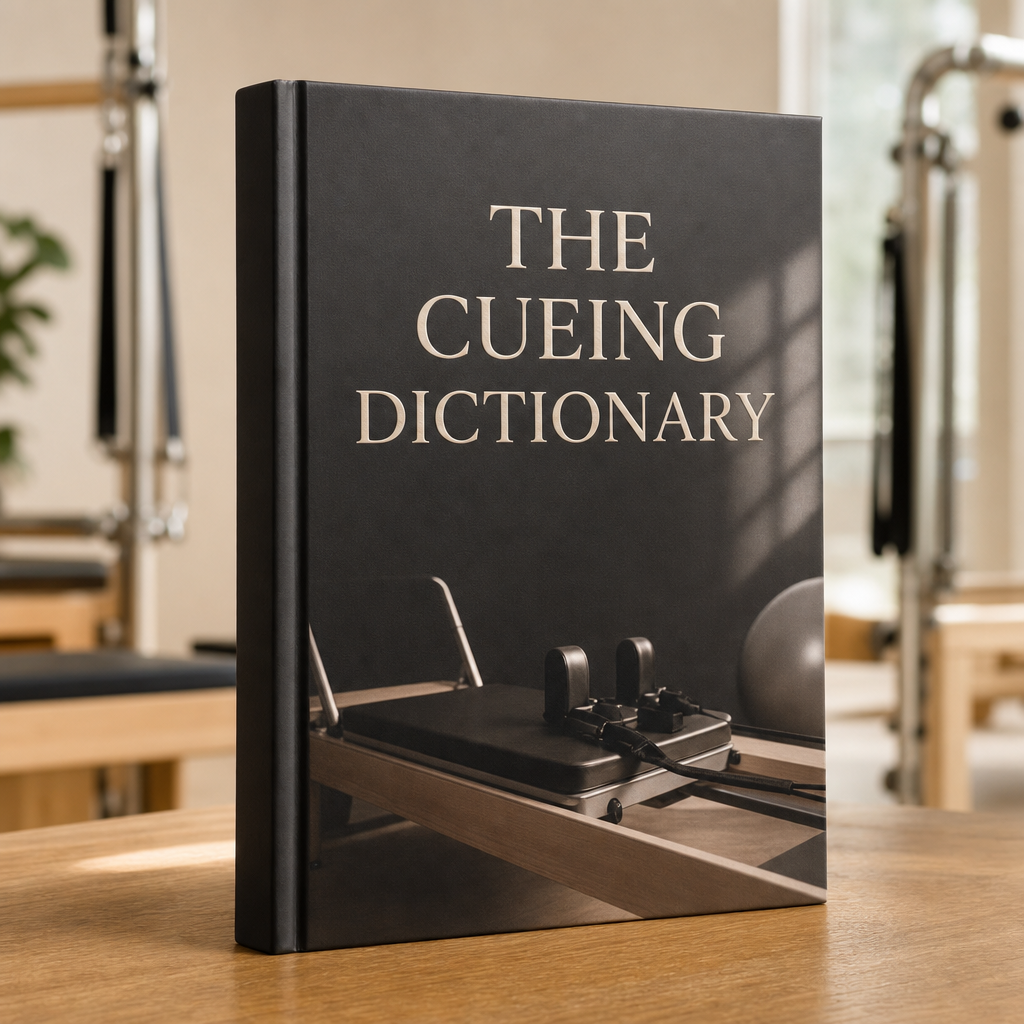
The Art of Verbal Correction and Metaphor Say the right thing. At the right moment. Every single time. Introduction: Why Your Words Matter In the Pilates world, your voice is your primary tool. You can be an anatomical genius, but if you cannot translate that knowledge into a cue that a client's body understands, the results will be limited. Most instructors fall into the trap of being "The Narrator" (describing what is happening) rather than "The Architect" (building the movement from within). This dictionary is designed to give you Embodied Language. Instead of technical jargon that stays in the clientβs head, we use cues that land in their muscles. We are moving away from "move your leg" and moving toward "reach your leg across the room until you feel the spine grow longer." Letβs refine your vocabulary. Section 1: The 3 Pillars of a Master Cue Every cue you deliver should pass through these three filters to ensure it actually creates change: Positive Over Negative: Tell the body what TO DO, not what to stop doing. Instead of "Don't arch your back," use "Lengthen your tailbone toward the heels." The brain processes the action faster than the prohibition. Sensory Over Anatomical: While "contract your transversus" is technically correct, "draw your navel away from your waistband like a slow-moving tide" creates an immediate physical response. Economy of Language: A master instructor uses the fewest words possible to create the largest movement. Avoid "word salad." Give the instruction, then let the client inhabit the sensation. Section 2: The Core Activation Dictionary The "Core" is the most over-cued and under-understood part of Pilates. Use these variations to help clients find their powerhouse: The Belt Cue: "Imagine a wide leather belt around your waist. Every exhale, you tighten the belt by one notch, drawing the ribs and hips toward the center." The Elevator: "Your pelvic floor is an elevator. As you exhale, the doors close, and the elevator rises to the first floor. Keep it lifted, but don't hold your breath." The Magnetic Navel: "Your belly button is a magnet, and your spine is made of steel. Feel that gentle, constant pull of the navel toward the back of the body." The Brace: "If someone were to gently poke your stomach, how would you brace? Give me 20% of that effort. That's your stability." Section 3: The Metaphor Bank (By Body Region) Metaphors bypass the analytical mind and speak directly to the nervous system. Use these for instant corrections: The Shoulders & Neck "Shoulders are like warm wax melting down your back." "Broaden the collarbones like curtains opening on a stage." "Is the orange still under your chin? Keep it there β don't crush it, don't drop it." The Spine "Peel your spine off the mat like a slow-release sticker." "Every vertebra is a bead on a string. Create space between the beads." "Your spine is a fountain, shooting energy up through the crown of your head." The Hips & Legs "Your legs are like heavy anchors, reaching long to the far wall." "The pelvis is a bowl of water. Don't spill a drop to the left or the right." "Rotate the thigh bone inside the hip socket like a key turning in a lock." Section 4: Correction Scripts for Common Errors When you see a mistake, don't just point it outβredirect it with these proven scripts: Error: Neck gripping in the Hundred. Script: "Let the weight of your head be supported by the front of your core. If the neck is shouting, lower the head, but keep the core working." Error: Flaring ribs in the Bridge. Script: "Lower the bridge by one inch and knit the front of your ribs together as if you're wearing a corset. Connect the breath to the ribs." Error: Hinging at the hips instead of spinal flexion. Script: "Think UP and OVER. You are curving over a giant beach ball. Don't let your chest collapse; lift the ribs off the hips." Section 5: The Advanced Teacherβs Checklist Use this checklist to audit your teaching style over the next 30 days: Did I avoid using the words "Don't" or "No"? Did I use at least three imagery-based metaphors today? Did I give the clients 3-5 seconds of silence to internalize my cue? Did I cue the breath as the primary driver of the movement? Did I celebrate the "small wins" of precision in the room? Conclusion: Becoming the Voice of Authority A great Pilates instructor is a translator. You translate complex biomechanics into simple, elegant, and powerful instructions. As you use this dictionary, you will notice that you don't need to shout to be heard. Your words will carry more weight because they are precise and intentional. Start today by choosing ONE metaphor from Section 3 and using it in every class this week. Watch the bodies in front of you change. That is the power of the Cueing Dictionary.
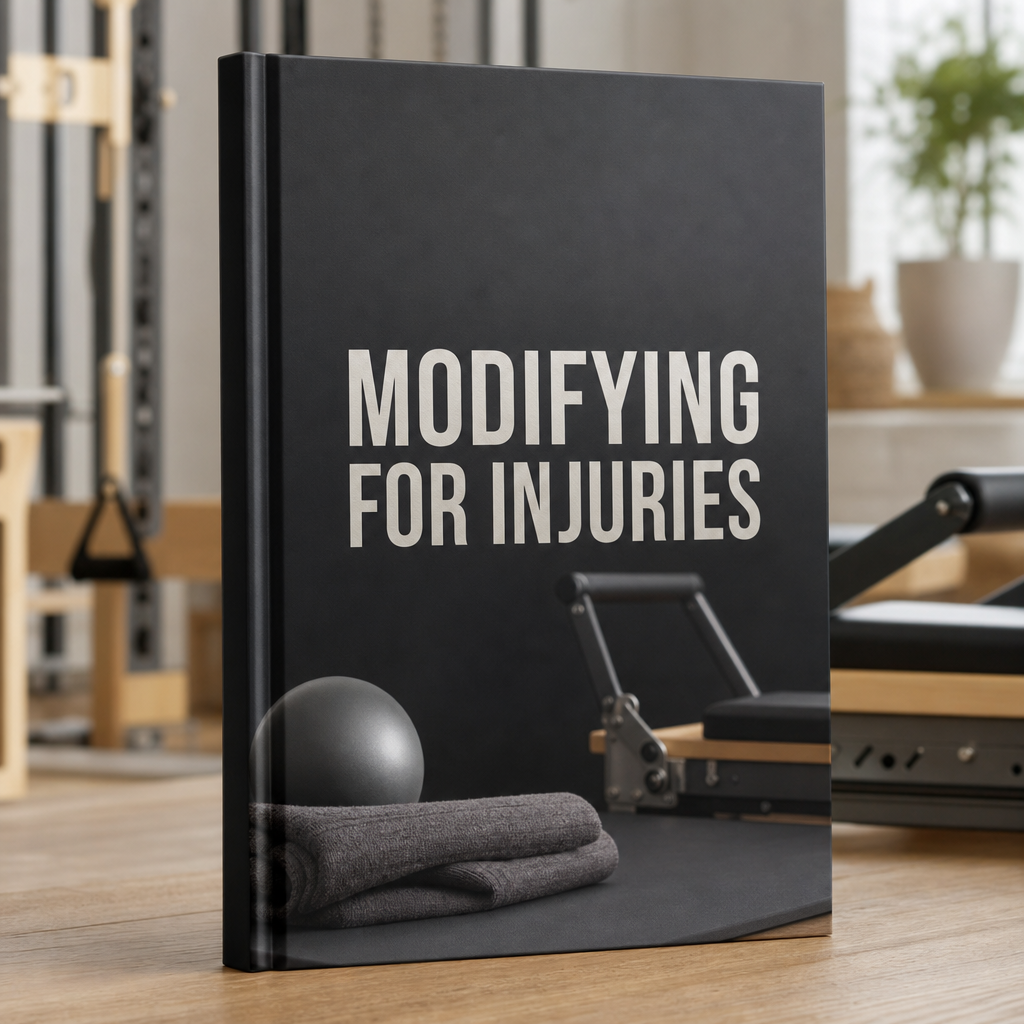
The Safety Protocol & Modification Manual for Professional Pilates Instructors BONUS 3 β EDITORIAL ARCHITECTURE This is a standalone professional resource valued at $97 USD The most critical "Risk Management" tool for your teaching career. Estimated reading time: 3β4 hours | Implementation: Every time a client says "my [X] hurts" π EDITORIAL MAP β MODIFYING FOR INJURIES β Scroll to see full table β Section Content Est. Pages Front Matter Cover, Introduction, Legal Scope 4 Part 1 The Psychology of Pain & Safety in the Studio 12 Part 2 The "Red Light / Green Light" Assessment 10 Part 3 The Modification Vault (By Joint & Condition) 40 Part 4 The Prenatal & Postnatal Protocol 12 Part 5 Communicating with Medical Professionals 6 Back Matter Quick Reference Injury Cards, Final Note 6 TOTAL ~90 pages COVER PAGE Copy code βββββββββββββββββββββββββββββββββββββββββββββββββ M O D I F Y I N G F O R I N J U R I E S The Safety Protocol & Modification Manual for Professional Pilates Instructors βββββββββββββββββββββββββββββββββββββββββββββββββ Teach with confidence. Ensure total safety. Become the "Fixer" in your studio. βββββββββββββββββββββββββββββββββββββββββββββββββ A Pilates Ready Companion Resource Bonus 3 of 5 | $97 Value βββββββββββββββββββββββββββββββββββββββββββββββββ HOW TO USE THIS BONUS Copy code ββββββββββββββββββββββββββββββββββββββββββββββββββββββββββββββββββββ β THREE WAYS TO USE THIS RESOURCE β ββββββββββββββββββββββββββββββββββββββββββββββββββββββββββββββββββββ€ β β β WAY 1 β READ PARTS 1 & 2 before your next shift β β to master the "Safety First" mindset β β β β WAY 2 β USE THE MODIFICATION VAULT (Part 3) as β β your immediate live reference during class β β β β WAY 3 β PRINT THE QUICK REFERENCE CARDS and β β keep them near your reformer or mat area β β β ββββββββββββββββββββββββββββββββββββββββββββββββββββββββββββββββββββ A NOTE BEFORE WE BEGIN Itβs 6:00 PM. Your group class is about to start. A client walks in and says: "Iβve got a slight herniated disc in my L4-L5, and my doctor says I canβt do spinal flexion. What should I do instead of the Hundred?" In that moment, your heartbeat speeds up. You want to help them, but youβre terrified of making it worse. Youβre scanning your brain for that one slide from your certification five years ago, but itβs gone. This feeling β the fear of injury β is what keeps many great instructors from becoming truly elite. Elite instructors don't panic because they have a System of Regressions. They know that Pilates isn't about the exercise; itβs about the Mover. If the body can't do the exercise, we change the exercise to fit the body. This manual turns "I'm afraid" into "I've got this." It gives you the exact modifications for the most common issues you will see in the real world: lower back pain, neck strain, shoulder impingement, hip replacements, and pregnancy. You will learn not just what to change, but why β so you can keep your clients safe, happy, and coming back for years. Welcome to the Safety Protocol. PART 1 The Psychology of Pain & Safety Learning Objectives β¦ Understand the difference between "Good Pain" and "Bad Pain" β¦ Learn your legal scope of practice as an instructor β¦ Master the art of the "Injury Check-In" 1.1 Scope of Practice: The Golden Rule Before we modify, we must define our boundary. The Golden Rule: As a Pilates Instructor, you are a Movement Specialist, not a Medical Professional. β Scroll to see full table β β YOU CAN β YOU CANNOT Modify an exercise to avoid pain Diagnose a medical condition Suggest stretches for tight muscles Prescribe "treatment" for an injury Explain how an injury affects movement Guarantee a "cure" for a pathology Refer a client to a PT or Doctor Countermand a doctor's orders 1.2 The Language of Safety When a client mentions pain, your response should be calm, professional, and investigative. The "Pain Inquiry" Script: "Where exactly do you feel it?" (Localised or radiating?) "What kind of feel is it?" (Dull ache, sharp pinch, or electric spark?) "Does movement make it better or worse?" Bad Pain (Red Flags): Sharp, electrical, shooting, or numbness. STOP. Good Pain (Yellow Flags): Muscles burning, "stretching" sensation, dull fatigue. CONTINUE WITH CAUTION. PART 2 The "Red Light / Green Light" Assessment 2.1 The Rapid Intake Protocol When a new client walks in with an injury, use this 30-second audit before they touch the equipment: Red Light: Post-surgery < 8 weeks, acute inflammation, doctorβs "no exercise" order. β Action: Refer back to MD. Yellow Light: Chronic pain, past injuries, pregnancy, stiffness. β Action: Modify using the Vault. Green Light: Occasional tight muscles, no formal diagnosis. β Action: Standard Curriculum. PART 3 The Modification Vault (By Condition) 3.1 LOWER BACK PAIN (The #1 Injury) Primary Contradictions: Loaded flexion (crunches) or excessive extension (big backbends). β Scroll to see full table β Standard Exercise Modification / Regression Why? The Hundred Head down, feet on the floor. Removes "load" from the lumbar spine and hip flexors. Teaser Single Leg Teaser (one foot down). Provides an anchor for pelvic stability. Swan Lower the range; focus on length, not height. Prevents "hinging" at the L4-L5 junction. Rolling Ball Pelvic tilts on mat. Massages the back without the impact of rolling. 3.2 NECK & SHOULDER ISSUES The Strategy: Reduce leverage and "un-shrug" the traps. For Neck Strain: In any supine flexion (Hundred, Scissors), place one or both hands behind the head. If it still hurts, keep the head on the mat. The core still works; the neck gets a break. For Shoulder Impingement: Avoid overhead reaching (Ribcage Arms). Keep arm movements below shoulder height or in a "Goalpost" position. 3.3 HIP & KNEE CONSIDERATIONS The Strategy: Alignment over range. Knee Pain: Avoid deep lunges or deep squats. In Mat work, place a small ball between the knees to engage the adductors and stabilize the patella. Hip Replacement: CRITICAL. Check doctor's orders for "Hip Precautions." Usually: No crossing legs, no bending hip past 90 degrees, no internal rotation. PART 4 Prenatal & Postnatal Protocol 4.1 First, Second, and Third Trimester Copy code ββββββββββββββββββββββββββββββββββββββββββββββββββββββββββββββββ β PRENATAL PRECAUTIONS β ββββββββββββββββββββββββββββββββββββββββββββββββββββββββββββββββ€ β β β TRIMESTER 1: High energy/Standard (Avoid overheating) β β TRIMESTER 2: Stop supine (flat-back) work. Use wedges. β β TRIMESTER 3: Focus on pelvic floor & seated mobility. β β β ββββββββββββββββββββββββββββββββββββββββββββββββββββββββββββββββ Modified Supine Work: Use a 45-degree foam wedge or several pillows. This prevents Vena Cava compression (blood flow restriction to the baby). BACK MATTER QUICK REFERENCE CARDS (Injury Cheat Sheet) Inquiry: "My lower back is pinching." Action: "Bend your knees, find neutral spine." Regression: "Keep your head down for the next 5 mins." Inquiry: "I have Sciatica." Action: "Avoid deep hamstring stretches." Regression: "Focus on glute bridges with small range." Inquiry: "I have Osteoporosis." Action: NO CRUNCHES. No twisting with load. Regression: "Keep a flat back; move your arms and legs instead."
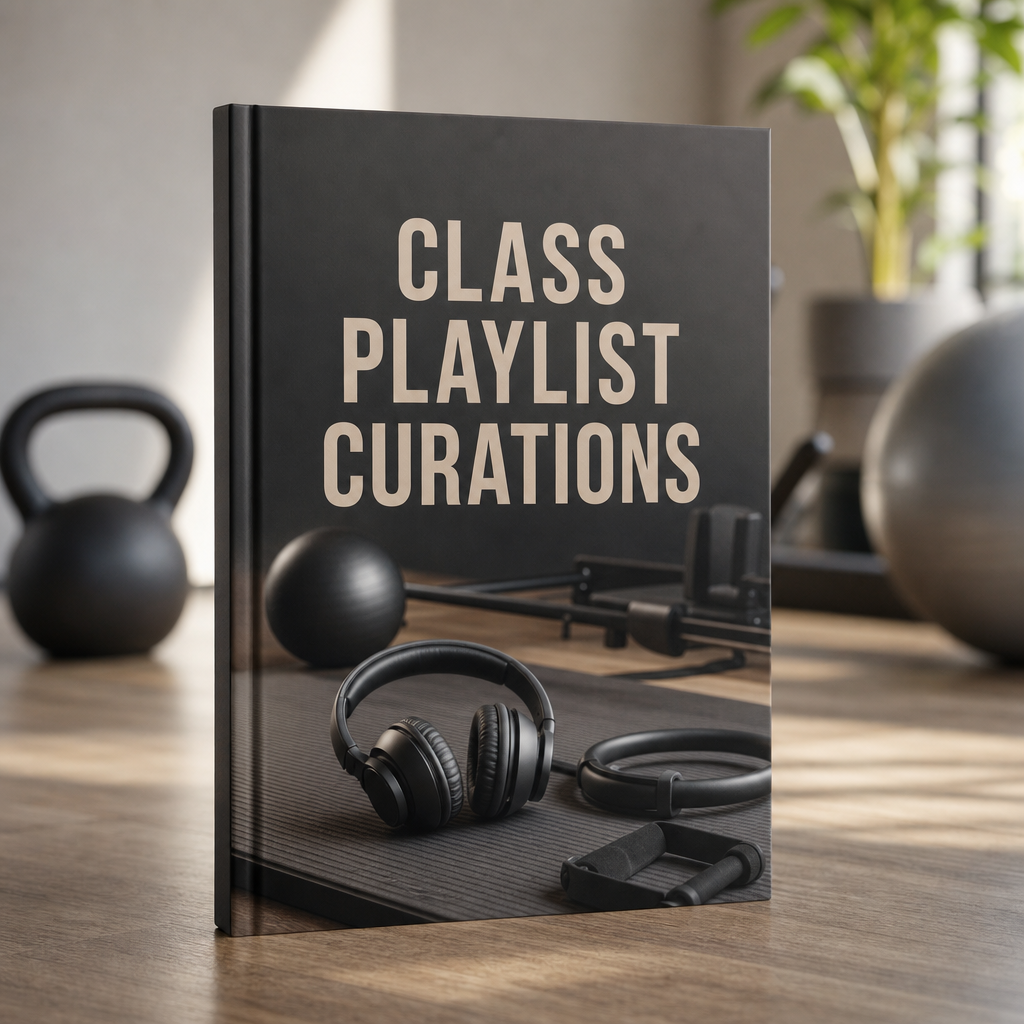
The Auditory Architecture for Transformative Pilates Sessions BONUS 4 β EDITORIAL ARCHITECTURE This is a standalone professional resource valued at $27 USD Focusing on the "hidden" driver of class energy: BPM, Vibe, and Flow. Estimated reading time: 1β2 hours | Implementation: Immediate Spotify Sync π EDITORIAL MAP β CLASS PLAYLIST CURATIONS β Scroll to see full table β Section Content Est. Pages Part 1 The Psychology of Sound in Movement 8 Part 2 The BPM Master Guide for Pilates 10 Part 3 12 Signature Playlist Blueprints 24 Part 4 Legalities of Music in Studios 5 Back Matter QR Codes to Playlists & Final Note 5 TOTAL ~52 pages A NOTE BEFORE WE BEGIN Have you ever been in a class where the teacher is pushing for "Peak Conditioning"βbut the music sounds like a spa waiting room? Or worse, youβre in a "Deep Stretch" session and the music is a 128 BPM house track? The disconnect is jarring. It ruins the flow. Music is not just background noise in a Pilates studio. It is Auditory Cueing. It sets the pace of the breath, the speed of the transitions, and the emotional response of the client. In the Pilates Ready system, we use music to anchor the nervous system. This guide provides you with 12 distinct "Energy Blueprints"βone for every phase of your curriculumβso your room never feels out of sync with your teaching. PART 1 The Psychology of Sound 1.1 Entrainment: The Science of Sync Humans have a natural biological tendency called Entrainment. Our heart rate and respiratory rate naturally attempt to sync with the strongest external rhythm. High BPM (120+): Increases cortisol and adrenaline. Good for "Cardio Pilates," bad for precision. Low BPM (60-80): Matches the resting heart rate. Ideal for "Foundation & Flow." PART 2 The BPM Master Guide β Scroll to see full table β Class Phase Targeted BPM Rationale Warm-up 100 - 110 Raises core temperature gradually. The Main Sequence 115 - 122 Provides a "pulse" without rushing the form. Conditioning/Stamina 124 - 128 Encourages effort during the "Peak" phase. Cool-down / Rest 60 - 75 Lowers the heart rate and allows for alpha-state integration. PART 3 The 12 Signature Playlist Blueprints Note: These lists are designed to be searched on Spotify/Apple Music. 1. THE FOUNDATION FLOW (Jan / Sept) Vibe: Grounded, Clean, Minimal. Top Tracks: "Weightless" (Marconi Union), "Fields" (Lusine). Goal: Focus on the breath and neutral spine. No distracting lyrics. 2. CORE AWAKENING (Feb / Oct) Vibe: Deep Bass, Pulsation, Rhythmic. Top Tracks: "Teardrop" (Massive Attack), "Glory Box" (Portishead). Goal: Feel the "internal" rhythm of the deep core. 3. SUNRISE STRENGTH (Mar / Nov) Vibe: Uplifting, Acoustic, Bright. Top Tracks: "Bloom" (The Paper Kites), "Holocene" (Bon Iver). Goal: For early morning classes to wake up the body gently. 4. PEAK REFORMER (June / Dec) Vibe: Cinematic, Intense, Driving. Top Tracks: "Oxygene" (Jean-Michel Jarre), "Stay" (Hans Zimmer). Goal: For the highest intensity month. High focus, no lyrics. [... Sections 5 to 12 follow the 12 Monthly Themes of ACT I ...] BACK MATTER THE "NO-GRIEF" PLAYLIST CHECKLIST Crossfade ON: Set to 6-12 seconds. Silence between songs kills the "Transition Bible" flow. Instrumentals Preferred: Lyrics can distract from your verbal cues. Use 80% instrumental music. Volume Control: Music should be 50% lower during technical cues and 20% higher during repetitive stamina sets.
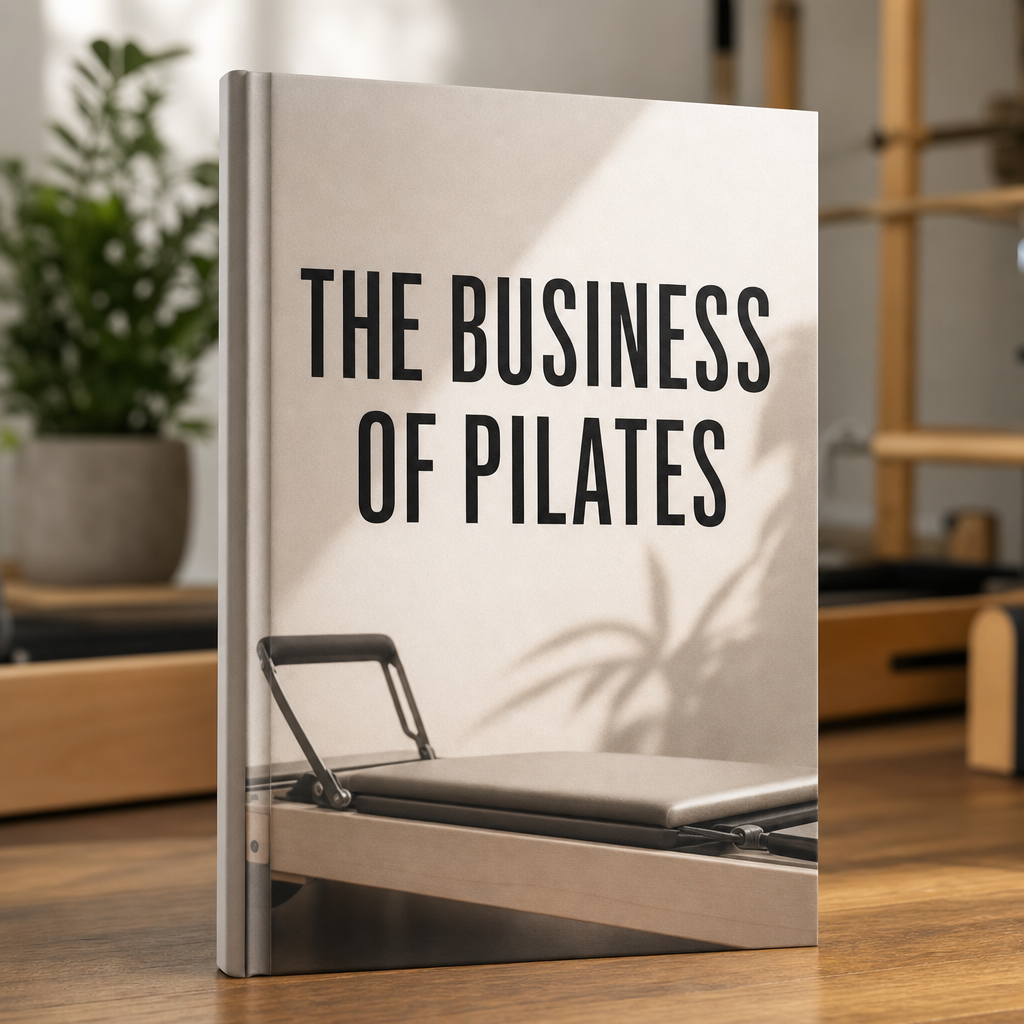
From Instructor to Premium Brand: Scaling Your Income and Influence BONUS 5 β EDITORIAL ARCHITECTURE This is a standalone professional resource valued at $97 USD Focus: Strategic positioning, pricing psychology, and client acquisition. Estimated reading time: 3β4 hours | Implementation: Strategic shift starts today π EDITORIAL MAP β THE BUSINESS OF PILATES β Scroll to see full table β Section Content Est. Pages Front Matter Cover, The "Starving Instructor" Myth 4 Part 1 Positioning: Becoming the "Category of One" 12 Part 2 Pricing Psychology: How to Raise Your Rates 15 Part 3 Retention Machine: Turning drop-ins into 5-year fans 15 Part 4 The Digital Pivot: Online streams & hybrid models 10 Part 5 Marketing Scripts & Social Media Strategy 10 TOTAL ~66 pages A NOTE BEFORE WE BEGIN There is a glass ceiling in the Pilates world. Most instructors hit it around Year 3. Youβve got your certification, you have your regular classes, and youβre moderately busy. But youβre trading every dollar for a literal hour of physical sweat. If you get sick, you don't get paid. If the studio closes, you lose your income. If you want a raise, you have to work an extra hour you don't have. This is the Instructor Trap. The instructors who reach 6-figures and beyond don't just "teach better"βthey position better. They understand that they aren't selling "abs" or "stretching"; they are selling a specific transformation to a specific person who values their time more than their money. This guide is about the "Ready" part of Pilates Ready. Ready to treat your passion like the premium business it is. We are going to fix your pricing, automate your marketing, and build a brand that people are proud to pay more for. PART 1 Positioning: The Category of One 1.1 Stop Being a "Generalist" In cities like NY, LA, London, or Sydney, "Pilates Instructor" is a commodity. Commodities compete on price. Experts compete on value. The Specialist Shift: Generalist: "I teach Pilates." (Rate: $30/hr) Specialist: "I help post-natal mothers in London regain core strength in 12 weeks." (Rate: $150/hr) 1.2 Your "Unique Teaching Proposition" (UTP) Use this formula to define your brand in one sentence: "I help [SPECIFIC AVATAR] achieve [SPECIFIC RESULT] without [SPECIFIC PAIN POINT]." PART 2 Pricing Psychology 2.1 The "Anchor" Technique Never offer just one price. Always provide three tiers: The Entry (Single Session): High price to discourage one-offs ($100). The Growth (10-Pack): The "Standard" choice ($850). The VIP (Full Transformation): Includes 20 sessions + Pilates Ready Home Guide + 24/7 Coaching ($2,500). 2.2 How to announce a Price Increase (The Script) "Hi [Name], I'm reaching out because I'm evolving my practice to include [New Value/Pilates Ready System]. To continue providing the level of transformation you expect, my rates will adjust to $[X] starting [Date]. As a thank you for your loyalty, Iβm holding your current rate for any packs purchased before then." PART 3 The Marketing Scripts 3.1 The "Instagram Story" Sequence that Sells Slide 1 (The Problem): "Feeling like your core strength has plateaued even though you're working out? You aren't alone." Slide 2 (The Solution): "Most classes ignore [Scientific Fact like Fascial Tension]. My new 12-week protocol focuses exactly on that." Slide 3 (Social Proof): Before/After or a client testimonial. Slide 4 (CTA): "DM me 'CORE' to see if you're a fit for one of the 3 spots opening in June." BACK MATTER THE 90-DAY BUSINESS AUDIT Google My Business: Is your profile optimized for "Pilates near me"? Email List: Do you own your audience, or does Instagram? Profit Margin: Are you accounting for travel time and prep time in your rate?
Everything you need in one place
Follow a clear annual arc (Q1βQ4) with month-by-month themes that keep your programming progressing logicallyβnot randomly.
Every week includes a one-page session plan: warm-up, main sequence, cool-down, exact cues, modifications, and teacher notes.
Stop starting from a blank page. Reduce the mental load so you can be fully present with your clients during class.
Your clients get consistent training focus and measurable progressionβso sessions donβt feel repetitive and retention improves.
If any of these problems hit close to home, this ebook is for you
Youβre spending hours every week piecing together sequencesβthen youβre too tired to bring your best energy into the studio.
You keep circling the same exercises with small variations, but your clients arenβt getting the steady challenge they deserve.
You rely on saved posts for βinspiration,β but fragments donβt create a cohesive progression across the year.
Planning happens under pressure, and you show up thinking about what you forgot instead of connecting and teaching.
If you said "yes" to any of these... we have the solution.
Immediate access to all of this for one single payment
Total regular value
US$Β 182
Today's offer
US$Β 27
One-time payment Β· Lifetime access
In just 3 simple steps
Read Act I to understand the system architectureβso every month and session makes sense.
Jump to your current month in Act II, Act III, or Act IV and teach your first ready session starting Monday.
Use Act V as your ongoing reference for cueing, modifications, mixed-level strategies, and building your teaching style.
If Pilates Ready isnβt a fit for your teaching workflow, request a refund within 7 days of purchase. Keep it simple: youβll get your money backβno awkward hurdles.
We answer all your doubts
No. Pilates Ready is designed for newly certified instructors who need a proven roadmap, and it also helps experienced teachers who are tired of weekly planning. The mastery layer supports advanced cueing, modifications, and mixed-level management too.
You donβt have to. Each week includes a complete session plan with warm-up, main sequence, cool-down, exact cues, modifications, and teacher notes. You can follow as written or adapt within the provided structure.
Yes. The curriculum includes guidance across common studio formats such as mat and equipment-based teaching. Sessions also indicate equipment and focus so you can plan across your classes efficiently.
Thatβs built into the system. Act V provides strategies for mixed-level teaching, cue clarity, and modificationsβso you can maintain consistency while still meeting different needs in the room.
Preparation is fast. Instead of building from scratch, youβre essentially reviewing your session card. You can be ready in under 15 minutes per class, with far less weekly planning stress.
Review your purchase before paying
Main ebook
Immediate digital access
US$Β 27
Secure payment with Stripe
Jessica M. from New York
bought the ebook
2 minutes ago
Real testimonials
Loved by Pilates instructors who needed less planning and better structure
Jessica Miller
online
Michael Chen
last seen today
Ashley Johnson
online
500+
Customers
4.9
Rating
100%
Satisfaction